A Guide to Gender-Affirming Wedding Ceremonies
Your wedding ceremony is a celebration of who you are, the love you share, and the life you’re choosing together. And when you’re queer, trans, non-binary, or beautifully outside the traditional boxes, the words used to tell your story matter.
A gender-affirming wedding ceremony reflects you as you truly are. Your names. Your pronouns. Your relationship. Your people. Your language. Your love.
Because there’s a beautiful difference between being welcomed into a space and being fully seen, affirmed, and celebrated within it.
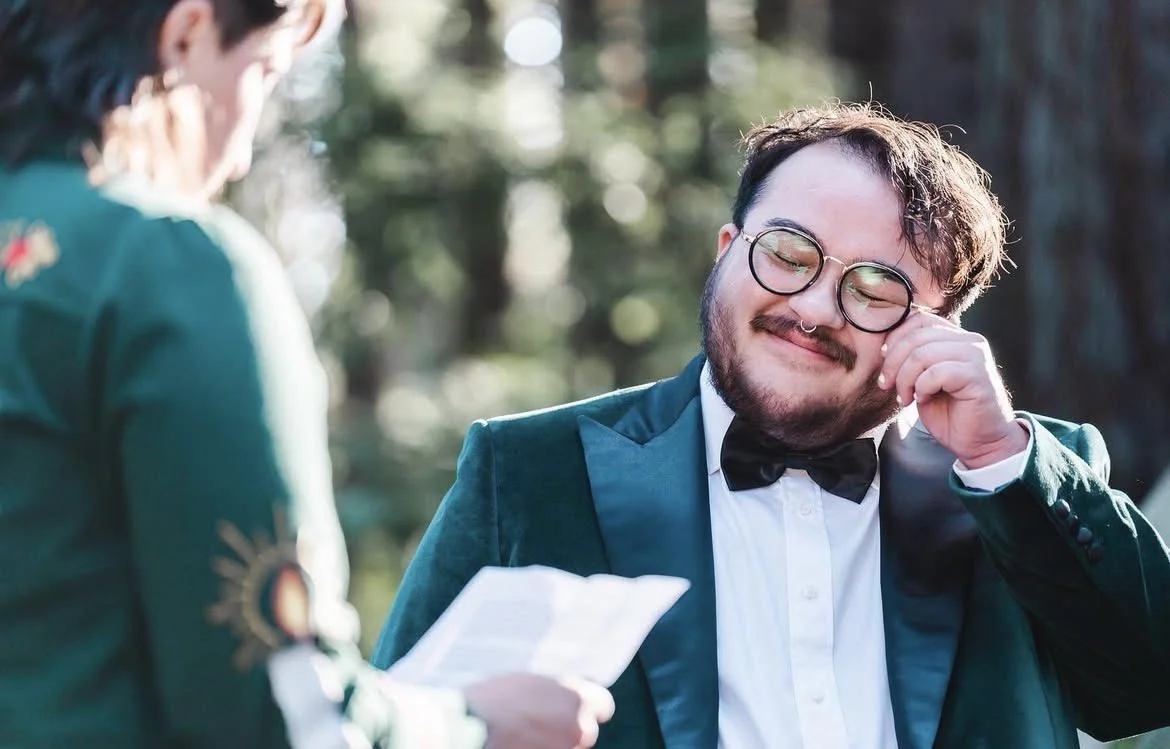
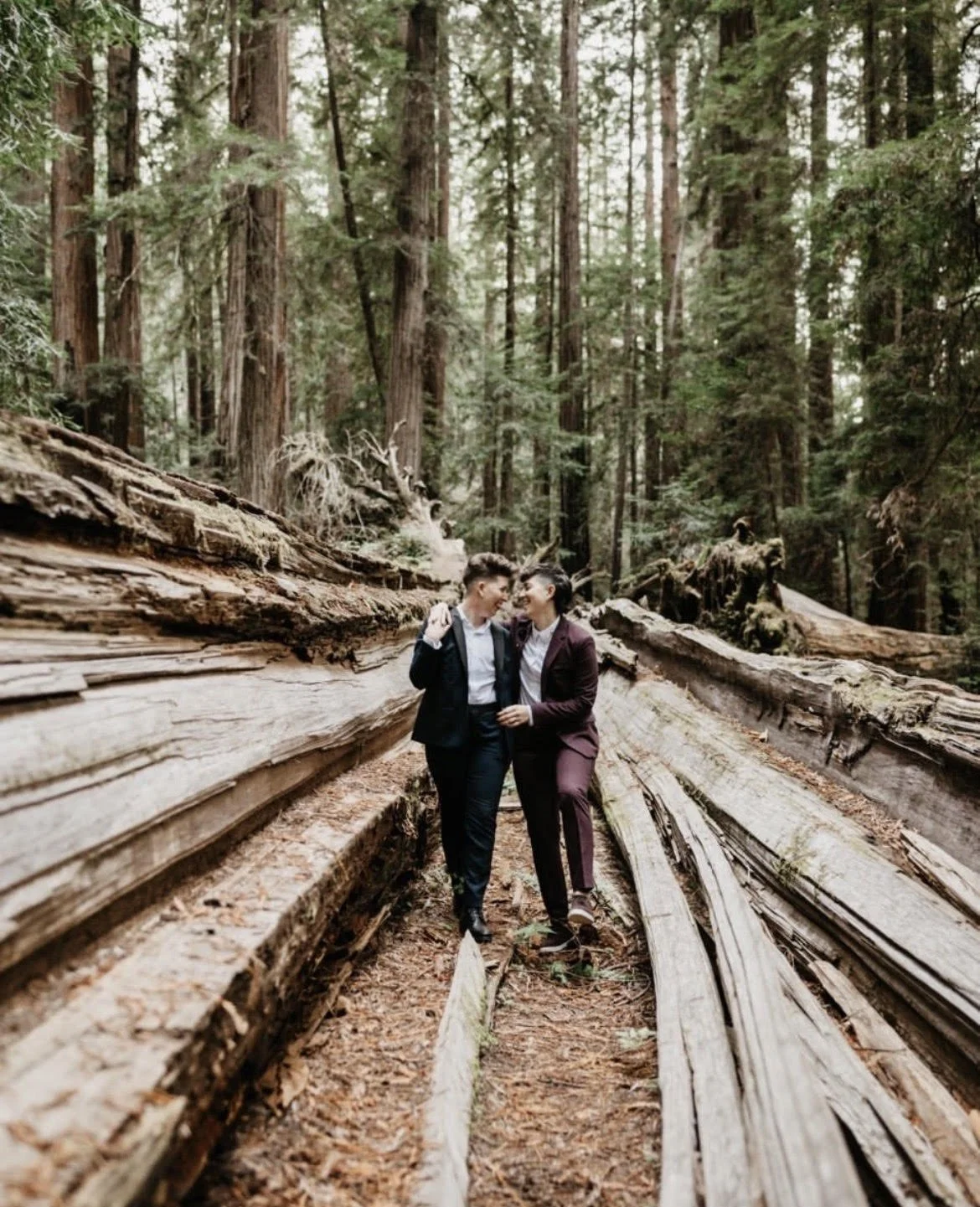
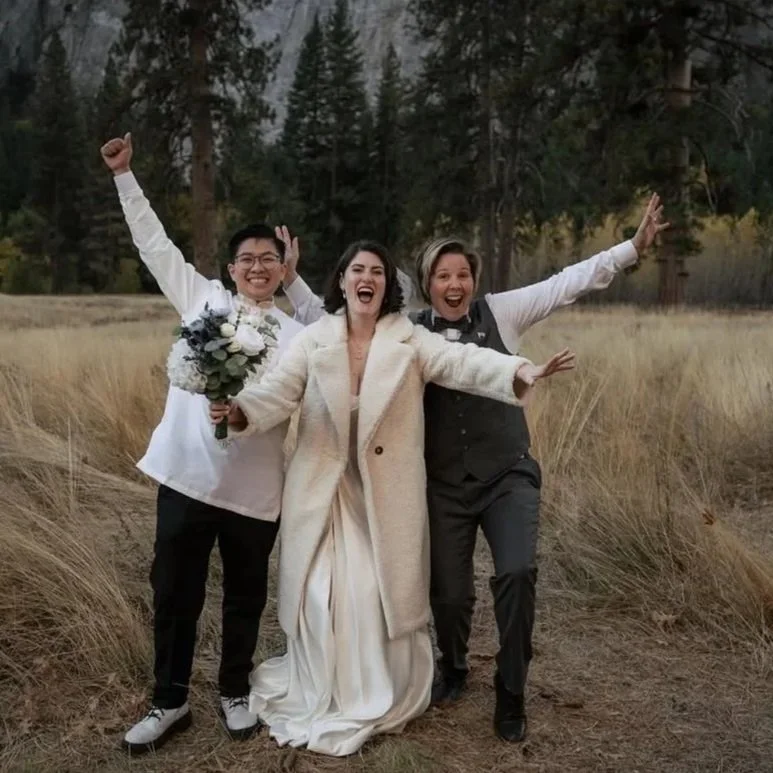

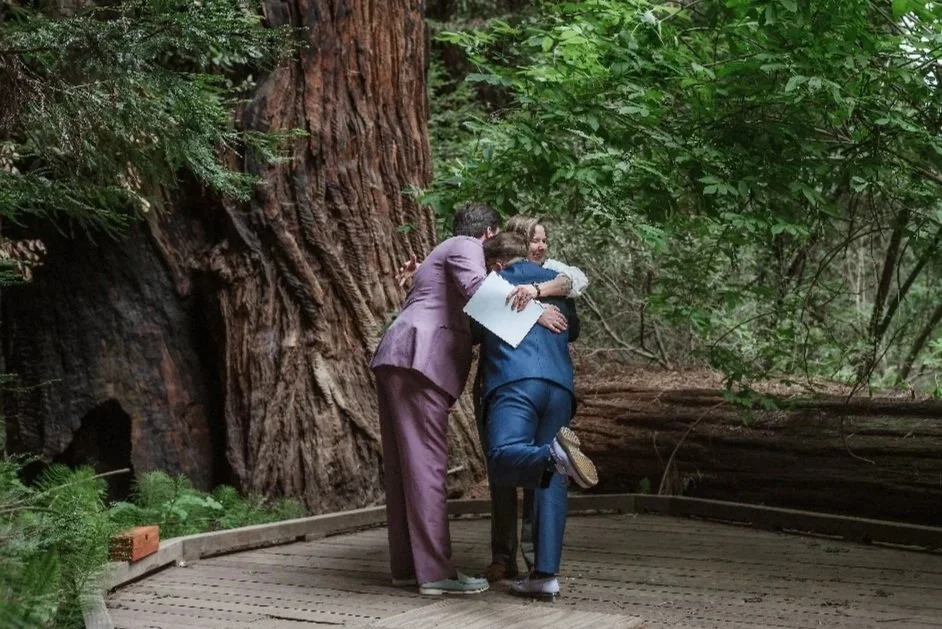
What Does Gender-Affirming Actually Mean?
Gender-affirming means creating an experience that recognizes, respects, and celebrates people as they know themselves to be.
In a wedding ceremony, that can be wonderfully simple. It means asking instead of assuming. It means using the names, pronouns, titles, and relationship language that feel right to you. It means creating space for your relationship to be described on its own terms rather than automatically placing you into traditional gender roles.
The goal is bigger than getting the language technically correct. It’s creating a ceremony where you can relax into being yourselves.
Queer-Friendly and Gender-Affirming Aren’t Quite the Same Thing
A wedding professional can enthusiastically welcome LGBTQ+ couples and still rely on language, traditions, forms, and assumptions that were built around heterosexual and cisgender couples.
Gender affirmation goes deeper.
Instead of assuming there will be a bride and groom, we ask what you call yourselves.
Instead of assuming someone will be “given away,” we ask what relationships you want to honor.
Instead of automatically using husband or wife, we learn the words you’ve chosen for each other.
Instead of fitting your relationship into a familiar wedding template, we begin with you.
That difference can seem small on paper. In the room, it can feel enormous.
Start With Names, Pronouns, and the Words That Feel Like You
One of the simplest ways to create an affirming ceremony is also one of the most powerful: ask people what they want to be called.
Names and pronouns matter. So do titles and relationship words.
Bride. Groom. Nearlywed. Partner. Spouse. Wife. Husband. Something entirely your own.
There is no prize for choosing the most gender-neutral language. The goal is language that feels true to you.
Gender affirmation is about choice.
Look at the Traditions You’re Including
Wedding traditions carry stories with them. Some may feel deeply meaningful to you. Others may have nothing to do with who you are.
You get to choose.
Take a curious look at traditions like walking down the aisle, being “given away,” wedding party roles, vows, introductions, parent acknowledgments, and even who stands where.
Ask:
Does this feel like us?
If the answer is yes, wonderful.
If you want to adapt it, wonderful.
If you want to create something completely different, also wonderful.
A tradition becomes meaningful because of the meaning you give it.
Celebrate Your People, Too
Gender affirmation can extend beyond the two people getting married.
Your wedding party, family, chosen family, and guests may include people of many genders and identities. Language like “bridesmaids and groomsmen,” “ladies and gentlemen,” or “mothers and fathers” may beautifully describe some groups and completely miss others.
There are so many expansive possibilities.
Wedding party. Wedding people. Parents and loved ones. Family and chosen family. Everybody. All of you wonderful humans.
Again, there isn’t one universally correct vocabulary. There’s thoughtful vocabulary that reflects the actual people in the room.
Your Love Story Should Sound Like Your Love Story
This is one of my favorite parts.
Your ceremony tells a story about who you are and what you mean to one another.
A gender-affirming love story doesn’t quietly translate your relationship into traditional roles. It gets curious about the actual dynamics, qualities, adventures, tenderness, humor, challenges, and tiny everyday moments that make your relationship yours.
Who makes the coffee?
Who remembers every detail?
Who starts the dance party?
What have you taught each other?
What do you treasure about the life you’ve created?
Those details are where your real love story lives.
Choose Wedding Professionals Who Ask Instead of Assume
Choosing the right wedding officiant or celebrant can make a huge difference in how your ceremony feels.
Look for professionals who are curious about you.
Notice their language. Their website. Their forms. Their questions. The way they respond when you share something about your identity.
You’re looking for more than someone who says, “Of course I work with LGBTQ+ couples.”
You’re looking for someone whose actions communicate:
I see you. I respect you. Tell me who you are and what would make this experience feel wonderful for you.
You Deserve More Than Inclusion
Ultimately, a gender-affirming wedding ceremony isn’t about following a perfect checklist.
It’s about creating the conditions for you to be fully yourselves.
To walk into your ceremony without performing a version of yourselves that makes more sense to somebody else.
To hear your names.
To hear your story.
To look around and see your people.
To feel the enormous joy of being loved exactly as you are.
Because inclusion is beautiful.
And I believe we can go even further.
You deserve to be seen. You deserve to be affirmed. And you deserve to be celebrated.
Ready to Create a Ceremony That Feels Like You?
If you’re dreaming of a wedding ceremony where you can show up fully as yourselves and feel seen, loved, and celebrated, I’d love to help you create it.
Through my Love Celebration Journey, we’ll explore your relationship, your story, and what matters most to you, then create a one-of-a-kind ceremony that feels unmistakably yours.